iPhone Air 2: Release Date, Price, Specs and Everything We Know So Far
Apple’s iPhone Air was always a strange one.
It went all-in on thinness, giving you a large 6.5-inch display inside a body that’s just 5.6mm thick. But that slim design came with some obvious compromises, especially the single rear camera and battery life.
Now Apple appears to be preparing an iPhone Air 2, and the early leaks suggest the company is fixing some of the biggest complaints without abandoning what makes the Air different.
The big changes reportedly include a second 48MP camera, a more efficient A20 Pro chip, a larger battery, a smaller Dynamic Island and new wireless chips.
There is one important thing to keep in mind: the iPhone Air 2 has not been announced by Apple. Everything below is based on leaks, analyst reports and supply-chain claims, so specs and dates can still change.
iPhone Air 2 release date
The latest and strongest reports point to spring 2027.
Analyst Jeff Pu says Apple plans to launch the iPhone Air 2 during the first quarter of 2027, potentially alongside the regular iPhone 18 and iPhone 18e. That would be a major change from Apple’s traditional September iPhone cycle.
Earlier reports suggested Apple had considered delaying or even removing the Air 2 from its roadmap because of weaker-than-expected sales for the first-generation Air. Later reporting indicated that Apple hadn’t abandoned the product.
So, as of August 2026, spring 2027 is the date I’d watch, but I wouldn’t treat it as locked.
Expected iPhone Air 2 specs
Here’s how the current rumor picture looks:
Spec iPhone Air 2 expected Current iPhone Air
Display 6.5-inch OLED, 120Hz 6.5-inch OLED, 120Hz
Chip A20 Pro, 2nm A19 Pro
RAM 12GB 12GB
Rear cameras 48MP + 48MP Ultra Wide 48MP single camera
Front camera 18MP Center Stage 18MP Center Stage
Battery ~3,500mAh rumored 3,149mAh
Wireless chip N2 N1
5G modem C2 C1X
Launch Expected spring 2027 September 2025
These specifications are rumored, not official. The 3,500mAh battery figure comes from supply-chain reporting, while the A20 Pro, 12GB RAM, N2 and C2 claims come from Jeff Pu’s latest research note.
The camera upgrade could be the biggest deal
This is the change I’m most interested in.
That’s a pretty big compromise for a phone positioned above Apple’s standard iPhone in price.
The Air 2 is widely expected to add a 48MP Ultra Wide camera alongside the existing main camera. Bloomberg reporting and later analyst claims both point in the same direction.
That sounds simple, but it changes how useful the phone is.
With an Ultra Wide camera, you’ll be able to squeeze more of a building, landscape or group of people into the frame. It also makes the Air much closer to the regular iPhone in terms of camera versatility.
I’d still expect the Pro models to keep the advantage for serious zoom photography.
But for most people, going from one rear camera to two is a huge improvement.
A20 Pro could make the Air 2 faster and cooler
The iPhone Air 2 is expected to use Apple’s A20 Pro chip, reportedly manufactured using TSMC’s 2nm process.
The interesting part isn’t just raw benchmark performance.
A smaller manufacturing process can help Apple improve efficiency while maintaining or increasing performance. That’s particularly important in a phone this thin.
The Air doesn’t have much internal space to play with.
So if Apple can get more performance per watt from the A20 Pro, the Air 2 could feel faster while also wasting less battery as heat.
That’s exactly what a thin phone needs.
Battery life could finally get better
Battery life is another area where the Air 2 reportedly needs work.
One supply-chain leak claims Apple is testing a 3,500mAh battery, compared with a reported 3,149mAh cell in the current Air. That’s roughly an 11% increase in capacity.
A 3,500mAh battery doesn’t automatically mean 11% longer battery life. Apple’s software, display efficiency, modem and processor all matter.
Still, combining a larger battery with a more efficient 2nm processor could make a meaningful difference.
This might be the upgrade that determines whether the Air concept really works.
Same 6.5-inch display, but a smaller Dynamic Island
Don’t expect a major screen-size change.
Current reports point to a display around 6.5 inches, essentially keeping the same form factor. One report specifically puts it at 6.55 inches.
The more interesting change could be the Dynamic Island.
Jeff Pu claims the Air 2 will have a smaller Dynamic Island, which would give you slightly more usable screen space.
It isn’t a dramatic upgrade, but on a phone built around a sleek, modern design, small changes like this can make the whole front look cleaner.
The design probably stays extremely thin
This is where I expect Apple to be conservative.
The Air’s entire identity is built around being thin and light. The current model measures just 5.6mm thick, making it Apple’s thinnest iPhone.
Apple reportedly wants to keep the same basic design for the second generation.
That’s actually the right move.
I’d rather see Apple keep the thin chassis and fix the compromises than make the Air thicker just to cram in every possible feature.
There are also reports that Apple could use a thinner OLED panel, potentially freeing up some internal space for the larger battery.
N2 and C2 chips could quietly matter
Two less flashy upgrades may end up being surprisingly important.
The iPhone Air 2 is rumored to use Apple’s second-generation N2 wireless networking chip and C2 5G modem.
The current Air already uses Apple’s custom N1 wireless chip and C1X modem.
These aren’t the features you’ll see advertised on a billboard, but they can affect battery life, connectivity and sustained performance.
For an ultra-thin phone, modem efficiency matters a lot.
Expected price: this is where I’m worried
One report expects Apple to push the Air 2 closer to $1,099, although pricing remains speculation at this stage.
And honestly, that’s the part I’d question.
At $999, the Air already sits in an awkward position. You’re paying substantially more than the standard iPhone while giving up some camera and battery advantages.
At $1,099, the Air 2 would be getting dangerously close to Pro territory.
Apple needs to make the Air feel like a premium choice, not an expensive compromise.
What I like about the iPhone Air 2 so far
If these leaks are accurate, there are several things to like:
Dual 48MP rear cameras should eliminate the biggest hardware complaint.
A20 Pro could bring better performance and efficiency.
A larger battery should help daily endurance.
A smaller Dynamic Island would clean up the front.
12GB RAM should give the phone plenty of headroom for demanding apps and Apple’s AI features.
The thin design reportedly remains the main attraction.
The combination is much more convincing than the first-generation formula.
What still worries me
There are some obvious question marks.
Price is the biggest one.
If Apple raises the price while keeping the Air’s compromises, it could struggle to justify its place in the lineup.
Then there’s the physical challenge.
Putting two cameras, a bigger battery and more powerful hardware into an ultra-thin chassis isn’t easy. Apple may have to make compromises somewhere, whether that’s thermal performance, battery size or camera hardware.
And there’s the speaker situation. The current Air has a single rear camera and a mono speaker setup, among other compromises.
If Apple fixes the cameras but leaves other limitations untouched, the Air 2 may still feel like a specialist phone rather than the obvious iPhone for most buyers.
iPhone Air 2 vs iPhone 18 vs iPhone 18 Pro
The rumored 2027 lineup could make the buying decision interesting.
Feature iPhone Air 2 iPhone 18 iPhone 18 Pro
Main appeal Thin, light design Value Maximum features
Display ~6.5″ OLED Rumored ~6.3″ ProMotion OLED
Chip A20 Pro A20 A20 Pro
Design Ultra-thin Traditional Premium Pro
Expected timing Spring 2027 Spring 2027 Fall 2026
These dates and specifications are still based on reports, and Apple’s eventual lineup could look different. Current reporting suggests Apple may split the iPhone 18 family into two launch periods, with the Pro models arriving first and the standard iPhone 18 and Air 2 following in spring 2027.
If you already own a recent iPhone, I wouldn’t rush to upgrade based on the rumors alone.
But if you’re specifically attracted to thin phones, the Air 2 is becoming much more interesting.
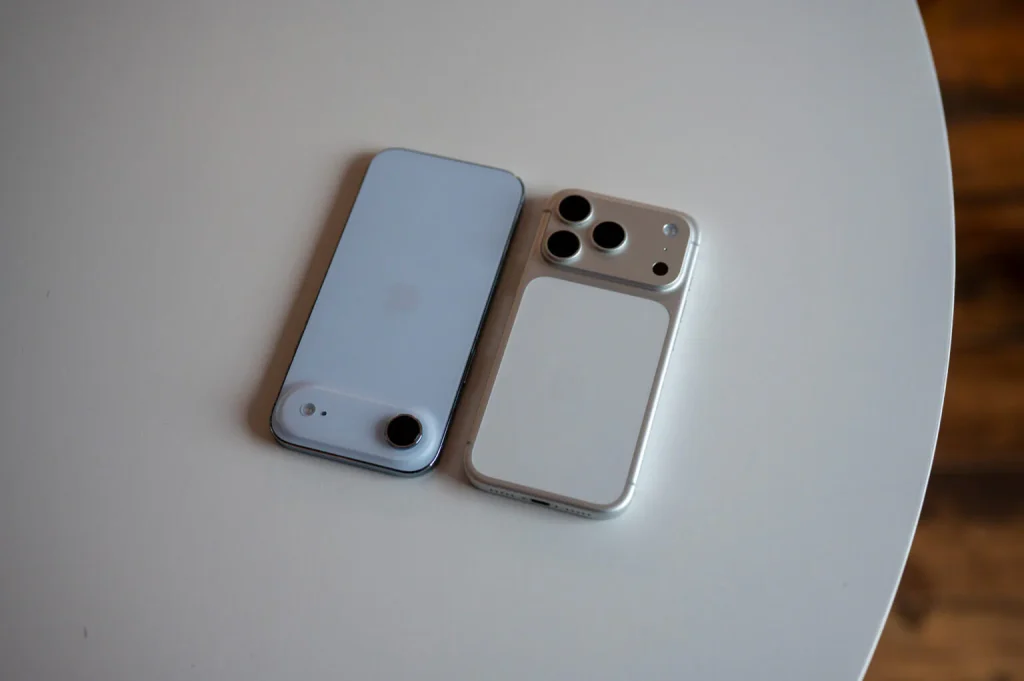
The first Air was essentially a showcase for how thin Apple could make an iPhone. The second generation looks more practical.
Two cameras. Bigger battery. New chip. Better connectivity. Same thin body.
That’s the formula I’d want.
The biggest thing Apple needs to get right is the price.
If the iPhone Air 2 launches around the $999 mark and delivers the rumored upgrades, I could see it becoming a genuinely compelling alternative to the regular iPhone.
If Apple pushes it to $1,099 or higher, the Pro models start looking awfully tempting.
My early verdict
The iPhone Air 2 could be the Air Apple should have launched in the first place.
The first-generation model made a bold trade: you got an incredibly thin iPhone, but you gave up camera versatility and some battery endurance.
The rumored sequel appears to be about fixing those compromises without losing the Air’s defining feature.
Just remember: none of these Air 2 specifications are official yet. Apple hasn’t announced the phone, and the expected spring 2027 launch could still move.
For now, I’d put the iPhone Air 2 firmly in the “wait and watch” category.
And if Apple really does manage to squeeze a second 48MP camera and a larger battery into that ultra-thin chassis, this could be a much more interesting iPhone than the first one.