Vivo Y600 Pro Review: 10,200mAh Battery, 120Hz AMOLED and 90W Charging
The Vivo Y600 Pro is not trying to win the spec-sheet race with a giant camera setup or a flagship processor. Vivo has taken a different approach: put a massive 10,200mAh battery inside a relatively mainstream phone and build the rest around it.
And honestly, that makes the Y600 Pro interesting.
The phone launched in China in April 2026, and Vivo’s official specifications confirm a 6.83-inch AMOLED display, Dimensity 7300e chipset, up to 12GB RAM, 512GB storage and 90W charging.
The big question for buyers in Pakistan is simple: is the enormous battery worth the compromises?
Vivo Y600 Pro: Key Specifications
| Feature | Vivo Y600 Pro |
|---|---|
| Display | 6.83-inch AMOLED |
| Resolution | 2800 × 1260 |
| Refresh rate | Up to 120Hz |
| Processor | MediaTek Dimensity 7300e |
| RAM | 8GB / 12GB LPDDR5 |
| Storage | 128GB / 256GB / 512GB UFS 3.1 |
| Rear camera | 50MP, f/1.8 |
| Front camera | 32MP |
| Battery | 10,200mAh |
| Charging | 90W |
| OS | OriginOS 6 |
| Connectivity | 5G, Wi-Fi 6, Bluetooth 5.4 |
| Weight | 221–223g |
| USB | USB-C 2.0 |
These are based primarily on Vivo’s official China specifications.
The 10,200mAh Battery Is the Star
Let’s start with the obvious.
10,200mAh is huge for a smartphone.
Vivo says the Y600 Pro uses a 38.15Wh silicon-carbon battery, with a rated capacity of 10,000mAh and typical capacity of 10,200mAh. It supports up to 90W wired charging and reverse charging through OTG.
This is the kind of phone that makes you stop worrying about your battery percentage.
Long gaming sessions? Fine.
A full day of 5G, YouTube, TikTok and social media? The battery has plenty of room.
Going away for a weekend and forgetting your charger? That’s where the Y600 Pro really makes sense.
There is a catch, though.
That enormous battery contributes to a 221–223g body, so this isn’t a lightweight phone. It’s also 8.15mm thick in most colors, increasing to 8.25mm for the gold version.
For me, that’s a reasonable trade if battery life is your number-one priority. But if you prefer a slim, light phone, you’ll notice it.
6.83-inch AMOLED Display
The display is another strong part of the package.
You get a 6.83-inch AMOLED panel with a sharp 2800 × 1260 resolution and refresh rates up to 120Hz. Vivo also lists HDR support and P3 wide color gamut.
The combination should be excellent for:
- Netflix and YouTube
- Gaming
- Reading
- Social media
- Web browsing
- General everyday use
The 120Hz refresh rate is especially important. Scrolling through apps feels considerably smoother than on a basic 60Hz display.
And because this is AMOLED, you get the usual benefits of deep blacks and strong contrast.
The screen is arguably one of the Y600 Pro’s biggest strengths after the battery.
Performance: Good, But Not the Main Attraction
Here’s where things get more complicated.
The Y600 Pro uses MediaTek’s Dimensity 7300e, built on a 6nm process. The CPU has four cores running at up to 2.5GHz and four efficiency cores at up to 2.0GHz, paired with a Mali-G610 GPU.
Vivo offers up to 12GB of LPDDR5 RAM and 512GB of UFS 3.1 storage, which is a much better memory setup than you might expect from a battery-focused phone.
For normal use, I’d expect it to be more than capable.
WhatsApp, Instagram, Chrome, YouTube, banking apps and multitasking shouldn’t be a problem.
But don’t mistake this for a gaming flagship.
The Y600 Pro’s focus is clearly endurance rather than maximum performance. Even WhatMobile noted that the move to the Dimensity 7300e comes with a performance trade-off compared with the Dimensity 7400 used in the previous Y500 Pro.
So if you’re buying primarily for PUBG Mobile, demanding Genshin-style games or heavy sustained workloads, there are phones I’d consider before this one.
Cameras: Surprisingly Simple
The camera setup is almost refreshingly straightforward.
There’s a 50MP f/1.8 rear camera and a 32MP front camera. Vivo’s official specification lists autofocus on the rear camera and electronic image stabilization for video.
But there is no giant collection of rear sensors.
In fact, Vivo’s official Chinese specification lists a single 50MP rear camera.
That’s important.
Don’t buy the Y600 Pro expecting an ultra-wide camera, dedicated telephoto lens or a multi-camera flagship experience.
The 50MP main camera should handle everyday photography well in good lighting, while night photography will depend heavily on Vivo’s processing.
For social media and casual photos, it should be fine.
For serious mobile photography, this isn’t the phone I’d pick.
Software: OriginOS 6
The Y600 Pro runs OriginOS 6, and Vivo lists it as the operating system for the phone.
This is worth mentioning for international buyers.
The phone’s official launch is in China, so the software experience and available services can differ from Vivo phones sold internationally.
That’s one of the biggest things I’d check before importing one.
A great hardware deal can become less attractive if your preferred apps, language options, notifications or Google services don’t behave exactly as expected.
Design and Handling
Despite that enormous battery, Vivo has managed to keep the phone relatively restrained.
The official dimensions are 163.90 × 76.50mm, with a thickness of around 8.15mm in most finishes. Weight sits at 221g or 223g depending on the color.
The colors include gold, purple, blue and black.
The downside is obvious: this is a big phone.
The 6.83-inch screen combined with the 10,200mAh cell means one-handed use won’t be its strongest point.
If you like large phones, that’s probably fine.
If you’re coming from a compact 6.1- or 6.3-inch phone, this will feel noticeably larger.
90W Charging Helps
A 10,200mAh battery would be annoying if charging it took forever.
Thankfully, Vivo supports 90W fast charging.
That’s exactly the kind of charging speed I’d want here.
The battery is enormous, so even though 90W sounds extremely fast, charging such a large cell is still a bigger job than charging a typical 5,000mAh phone.
Vivo also supports several lower charging standards, including 80W, 66W, 55W and 44W modes, along with PPS and PD support at lower power levels.
What I Like About the Vivo Y600 Pro
- 10,200mAh battery is the obvious headline feature.
- 90W charging makes that giant battery practical.
- 6.83-inch 1.5K AMOLED looks like a great fit for media consumption.
- 120Hz refresh rate keeps the interface smooth.
- Up to 12GB RAM + 512GB UFS 3.1 is a strong memory configuration.
- 32MP selfie camera is a nice touch.
- 5G, Wi-Fi 6 and Bluetooth 5.4 are included. Vivo
- The phone isn’t excessively thick considering the battery capacity.
What I Don’t Like
- 221g+ is heavy.
- The Dimensity 7300e isn’t aimed at hardcore gaming.
- Only one rear camera means no ultra-wide or telephoto flexibility.
- USB-C is still USB 2.0. Vivo
- The China-market OriginOS version may not be ideal for everyone outside China.
- Global/Pakistan availability remains the big question.
Vivo Y600 Pro Price in Pakistan
This is where things get interesting.
Vivo’s official China pricing starts at CNY 2,099 for 8GB + 128GB, while the top 12GB + 512GB model is listed at CNY 2,899. Vivo
Pakistan pricing is less straightforward.
Vivo Pakistan’s current official product catalog does not list the Y600 Pro, while the Y500 is officially available in Pakistan.
WhatMobile currently lists the Y600 Pro as coming soon with an expected price of Rs. 98,999, but that should not be treated as an official Vivo Pakistan price.
So if you’re searching for Vivo Y600 Pro price in Pakistan, I’d treat Rs. 98,999 as a rough market expectation rather than a confirmed launch price.
Vivo Y600 Pro: Who Should Buy It?
This phone makes the most sense for a very specific type of buyer.
Buy it if battery life matters more to you than camera versatility or gaming performance.
The Y600 Pro looks particularly attractive for people who:
- Spend hours watching videos.
- Travel frequently.
- Don’t like carrying a power bank.
- Want a huge AMOLED display.
- Need strong battery endurance for work.
- Want lots of storage.
- Play games casually rather than competitively.
I’d look elsewhere if your priorities are:
- Flagship-level gaming performance.
- Excellent zoom photography.
- A lightweight phone.
- A mature global software experience.
- The best camera system for the money.
Final Verdict
The Vivo Y600 Pro is basically a battery phone disguised as a mainstream smartphone.
And I mean that as a compliment.
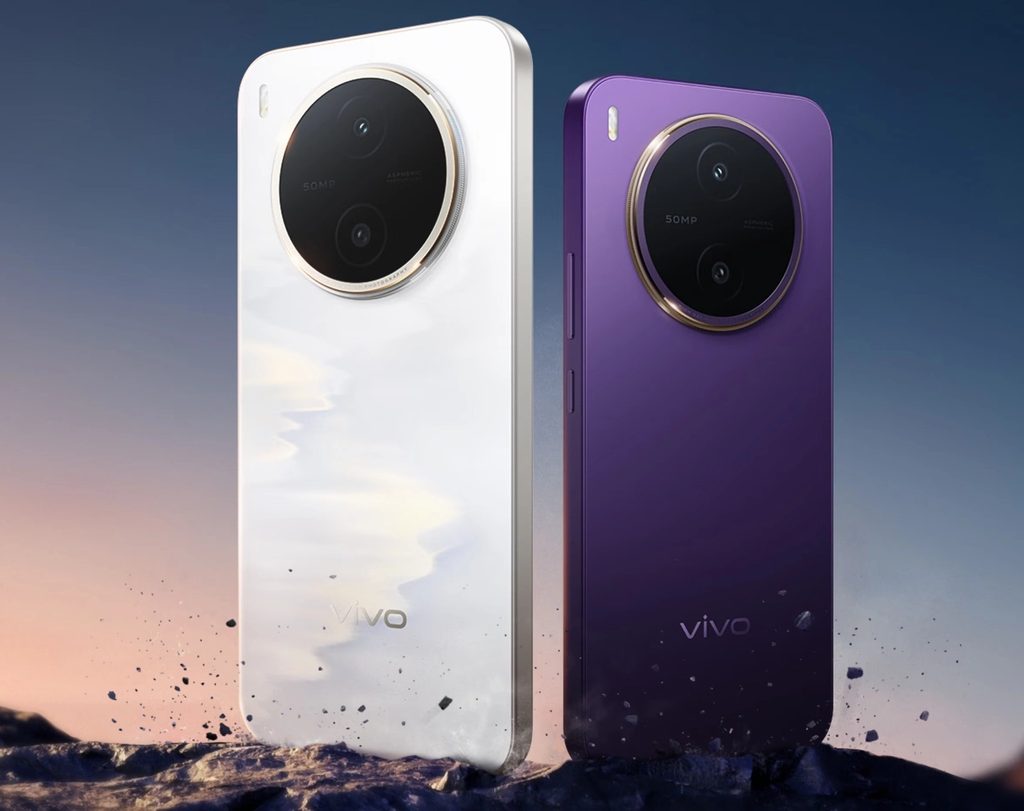
A 10,200mAh battery, 90W charging, 120Hz AMOLED display, up to 12GB RAM and 512GB UFS 3.1 storage give it a very clear identity.
But Vivo had to make compromises somewhere.
The phone is heavy. The chipset isn’t designed to dominate benchmarks. The camera setup is basic compared with camera-focused rivals. And for Pakistani buyers, the biggest issue right now is official local availability.
If your dream phone is one that simply refuses to die before bedtime, the Y600 Pro is one of the most interesting options I’ve seen in 2026.
If you want the fastest gaming phone or the best camera system, though, I’d spend the money elsewhere.