POCO C85 Review: Big Battery, 120Hz Display, But Is It Worth Your Money?
The POCO C85 is the kind of phone that looks extremely tempting on a spec sheet.
You get a huge 6.9-inch display, a 120Hz refresh rate, a 6,000mAh battery, 33W charging, a 50MP main camera and up to 8GB of RAM with 256GB storage. On paper, that sounds like a lot of phone for the money.
But there’s a catch.
The POCO C85 is still a budget phone, and some of its compromises become obvious once you look beyond the headline numbers. The 720p display, entry-level Helio G81-Ultra processor and relatively slow eMMC 5.1 storage are reminders that POCO had to cut costs somewhere.
So, is the POCO C85 worth buying in 2026? Let’s break it down.
POCO C85: Key Specifications
| Specification | POCO C85 |
|---|---|
| Display | 6.9-inch LCD |
| Resolution | 1600 × 720 |
| Refresh rate | Up to 120Hz |
| Processor | MediaTek Helio G81-Ultra |
| RAM | 6GB / 8GB |
| Storage | 128GB / 256GB |
| Storage type | eMMC 5.1 |
| Rear camera | 50MP main + auxiliary lens |
| Front camera | 8MP |
| Battery | 6,000mAh |
| Charging | 33W |
| Software | HyperOS 2 |
| Network | 4G |
| microSD | Up to 1TB |
| Headphone jack | Yes |
| Water/dust resistance | IP64 |
| Weight | About 205g |
| Colors | Black, Purple, Green |
These specifications are based on POCO’s official global specifications. Regional configurations can differ.
Design: Surprisingly Decent for a Budget Phone
The POCO C85 doesn’t look like a cheap phone from a distance.
The design is fairly clean, with a curved rear cover and a large camera area that gives it some visual character. It comes in Black, Purple and Green, so there is a little choice beyond the usual black-and-blue budget-phone lineup.
At around 205 grams and roughly 8mm thick, it’s not exactly lightweight, but that’s understandable when you consider the enormous 6,000mAh battery inside.
And that battery is important.
A big battery usually means either a chunky phone or disappointing endurance. POCO has managed to keep the C85 reasonably slim while still packing a 6,000mAh cell.
There’s also an IP64 rating, which gives the phone protection against dust and water splashes under controlled conditions. Just don’t confuse that with full waterproofing.
Display: 120Hz Sounds Great. The Resolution Is the Problem.
The biggest talking point here is the 6.9-inch display with a 120Hz refresh rate.
Scrolling through social media, browsing websites and moving around the interface should feel noticeably smoother than a traditional 60Hz budget phone.
The panel can also reach 660 nits typical brightness and 810 nits in high-brightness mode, while POCO includes DC dimming and TÜV Rheinland certifications for flicker-free, low-blue-light and circadian-friendly viewing.
But here’s the part I don’t love.
The resolution is only 1600 × 720 pixels.
On a 6.9-inch screen, that’s not particularly sharp. Text won’t look as crisp as it does on a 1080p panel, and fine details in photos and videos can look softer than you’d expect from such a physically large display.
So you have an interesting trade-off:
Huge and smooth, but not especially sharp.
For TikTok, YouTube, Facebook and general browsing, the size is a plus. If you’re picky about display sharpness, this is one of the C85’s biggest weaknesses.
Performance: Fine for Everyday Tasks, Not a Gaming Monster
Inside the POCO C85 is MediaTek’s Helio G81-Ultra, an octa-core chip with two Cortex-A75 cores and six Cortex-A55 cores, running at up to 2.0GHz. Graphics are handled by the Mali-G52 MC2 GPU.
This isn’t a performance-focused chipset.
For normal use, though, it makes sense.
Apps such as WhatsApp, YouTube, Chrome, Facebook and Instagram are within its comfort zone. Light multitasking should also be fine, particularly with the 8GB version.
Gaming is where expectations need to be realistic.
Casual and lighter games are the sweet spot. More demanding 3D games will require reduced graphics settings, and this isn’t the phone I’d pick if gaming performance is your main priority.
There’s another detail worth knowing: POCO uses eMMC 5.1 storage rather than faster UFS storage.
That’s a pretty significant compromise.
The phone can have plenty of RAM, but storage speed also affects how quickly apps open, files move and the system responds to heavier workloads.
RAM and Storage: Don’t Get Fooled by “16GB RAM”
POCO advertises support for up to 16GB RAM with Memory Extension.
That sounds impressive.
But it’s important to understand what that number actually means. The C85’s physical RAM options include 6GB and 8GB, while Memory Extension uses part of the phone’s internal storage as virtual memory. The advertised 16GB figure is based on the 8GB model.
So don’t buy the phone thinking you’re getting a genuine 16GB RAM smartphone.
The 8GB + 256GB model is the configuration I’d choose. The extra storage is useful, and you can also add a microSD card with support for capacities up to 1TB.
That’s a strong practical feature for people who keep lots of videos, photos and offline files.
Camera: 50MP Doesn’t Tell the Whole Story
On the back, the POCO C85 has a 50MP main camera with an f/1.8 lens, paired with an auxiliary camera.
The front camera is 8MP. Both front and rear cameras can record video at up to 1080p at 30fps.
In good daylight, the 50MP sensor should be capable of producing perfectly usable photos.
But don’t expect flagship-level image processing.
The lack of a proper ultra-wide camera is also noticeable. This is much more of a point-and-shoot budget camera setup than a versatile photography system.
Night photography is another area where you should keep expectations under control.
The phone has a Night mode, but the hardware and processing aren’t designed to compete with more expensive devices. In difficult lighting, you’ll likely see softer details and more noise.
And no, there is no 4K video recording. The rear camera tops out at 1080p/30fps.
Battery Life: This Is the C85’s Strongest Feature
Now we get to the good stuff.
The POCO C85 packs a 6,000mAh battery.
For a budget phone, that’s exactly the sort of hardware I like to see. POCO claims up to 22 hours of video playback under its internal testing conditions, although real-world endurance will obviously depend on brightness, network usage, apps and refresh rate.
For normal users, the battery should comfortably be one of the phone’s best features.
If your daily routine is mostly WhatsApp, browsing, YouTube, social media and calls, battery anxiety shouldn’t be a major concern.
There’s also 33W wired charging, and POCO claims around 31 minutes to reach 50% under its testing conditions.
One annoying detail: the charger isn’t included in the box in some markets. POCO recommends its 33W Xiaomi charger.
That’s worth checking before buying because a missing charger changes the real cost of ownership.
Software: HyperOS 2 Is Familiar, But Not Lightweight
The POCO C85 runs Xiaomi HyperOS 2.
The interface is feature-packed and familiar if you’ve used a recent Xiaomi, Redmi or POCO phone.
You get plenty of customization options, useful system tools and the usual Android experience. But budget POCO phones can also come with preinstalled apps and recommendations that some users won’t want.
The good news is that much of that can be cleaned up.
The less exciting news is that the modest processor and eMMC storage mean you shouldn’t expect the same long-term smoothness as a more expensive phone with a faster chipset and UFS storage.
Connectivity: Surprisingly Practical
The C85 sticks to 4G, rather than 5G.
That’s a limitation if you’re specifically shopping for a 5G phone, but 4G remains perfectly usable for most everyday mobile tasks.
POCO does give you some useful extras:
- Dual SIM support
- Dedicated microSD support
- 2.4GHz and 5GHz Wi-Fi
- Bluetooth 5.4
- 3.5mm headphone jack
- FM radio support
- Side-mounted fingerprint scanner
- USB Type-C
- NFC, depending on the market POCO
The headphone jack in particular is something I wish more budget phones kept.
POCO C85 Price in Pakistan
As of September 2026, the POCO C85 is being listed in Pakistan around Rs. 47,999 for the 8GB + 256GB configuration, although retailer pricing varies. Some Pakistani sellers currently list it closer to Rs. 51,000–55,000.
That difference matters.
At around Rs. 48,000, the C85’s battery, large 120Hz screen and 256GB storage make a compelling case.
At Rs. 55,000, I’d start looking much harder at competing phones.
POCO C85: Pros and Cons
What I Like
- Huge 6,000mAh battery
- Large 6.9-inch 120Hz display
- 33W charging
- 8GB + 256GB option
- microSD support up to 1TB
- 3.5mm headphone jack
- IP64 splash and dust resistance
- Side-mounted fingerprint scanner
- USB Type-C
- Reasonable design for the price
What I Don’t Like
- Only 720p display resolution
- Helio G81-Ultra is not a powerful gaming chip
- eMMC 5.1 storage is relatively slow
- No 5G
- Camera setup is basic
- No 4K video
- Charger availability depends on the market
- The phone is fairly large and heavy
POCO C85 vs the Competition
The biggest problem isn’t that the POCO C85 is bad.
It isn’t.
The problem is that the budget smartphone market is extremely competitive.
At this price, you’re often choosing between battery life, display quality, camera performance and processing power rather than getting everything in one device.
The C85 clearly prioritizes battery life and screen size.
If those are your top priorities, that’s a sensible choice.
If you want a sharper display or stronger gaming performance, I’d look elsewhere before spending your money.
Should You Buy the POCO C85?
Yes — if battery life and a huge screen matter most to you.
The POCO C85 makes sense for students, social-media users, parents, casual users and anyone who simply wants a phone that can last a long time between charges.
The 6,000mAh battery is the star of the show. The 120Hz refresh rate is another nice touch, and the 8GB + 256GB configuration gives you plenty of storage for everyday use.
But I wouldn’t recommend it to a serious mobile gamer.
I also wouldn’t recommend it to someone who cares deeply about display sharpness or smartphone photography. The 720p panel and basic camera hardware are clear compromises.
My Verdict
The POCO C85 is a battery-first budget phone, not an all-round performance champion.
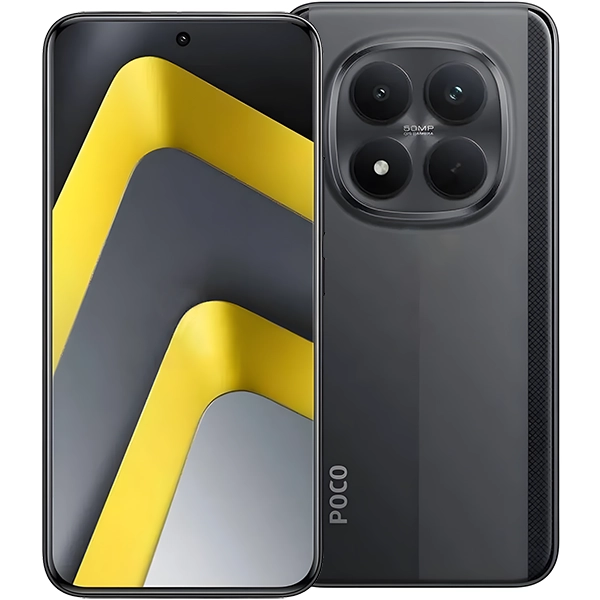
Its strengths are easy to understand: big battery, big screen, 120Hz refresh rate, expandable storage and a sensible price.
Its weaknesses are just as clear: 720p resolution, modest performance, slow eMMC storage and basic cameras.
At around Rs. 48,000 in Pakistan, the C85 is worth considering. At significantly higher prices, I’d be much more cautious.
If your priority is getting through the day without reaching for a charger, though, the POCO C85 gets the job done.