POCO M8 Pro 5G Review: A Big-Battery Mid-Ranger With Serious Hardware
The POCO M8 Pro 5G is the kind of phone that makes you look twice at its spec sheet.
A 6.83-inch 1.5K AMOLED display. A Snapdragon 7s Gen 4 chip. A huge 6,500mAh battery. And 100W charging.
That sounds aggressive for a mid-range phone. And on paper, it is.
POCO launched the M8 Pro 5G on January 8, 2026, and the company is clearly positioning it as an all-rounder rather than a camera-first flagship.
I haven’t personally put the M8 Pro 5G through a full hands-on test, so this review focuses on the confirmed hardware and what those specifications mean for real-world use.
POCO M8 Pro 5G Specs at a Glance
| Specification | POCO M8 Pro 5G |
|---|---|
| Display | 6.83-inch 1.5K AMOLED |
| Resolution | 2772 × 1280 |
| Refresh rate | Up to 120Hz |
| Peak brightness | 3,200 nits |
| Processor | Snapdragon 7s Gen 4, 4nm |
| RAM | 8GB / 12GB LPDDR4X |
| Storage | 256GB / 512GB UFS 2.2 |
| Main camera | 50MP Light Fusion 800, OIS |
| Ultrawide | 8MP |
| Selfie camera | 32MP |
| Battery | 6,500mAh |
| Charging | 100W HyperCharge |
| Reverse charging | Up to 22.5W wired |
| Software | HyperOS 2.2 based on Android 15 at launch |
| 5G | Yes |
| Protection | IP66/IP68-rated testing, Gorilla Glass Victus 2 |
| Weight | About 206g |
The official specifications confirm 8GB+256GB and 12GB+512GB configurations, although exact availability can vary by market.
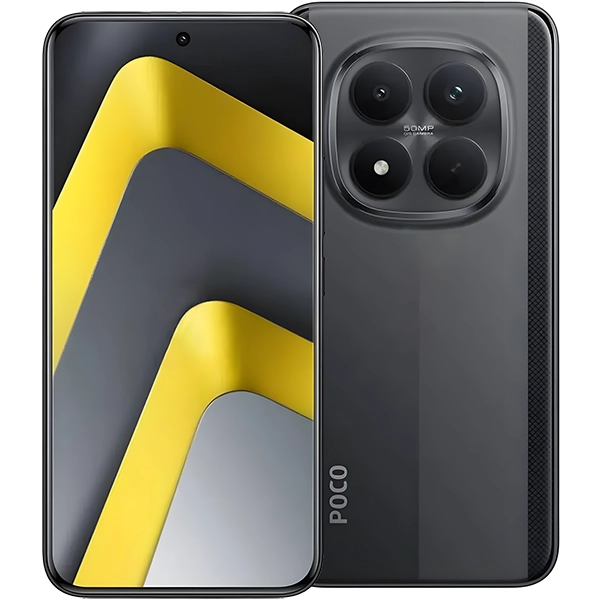
Design: Big Phone, But Not Excessively Heavy
The first thing you notice about the M8 Pro 5G is its size.
At 6.83 inches, this isn’t a compact phone. If you prefer something that disappears into a pocket, look elsewhere.
The upside is obvious: that large body gives POCO room for a massive battery and a spacious display.
The phone measures roughly 163.3 × 78.3 × 8.3mm and weighs around 206 grams. That’s fairly reasonable considering the 6,500mAh battery inside.
POCO is also using Corning Gorilla Glass Victus 2 on the front. The company lists black, silver and green color options.
There’s serious durability here
The M8 Pro 5G is listed with IP66/IP68 protection under the stated laboratory conditions, which is a welcome feature at this price level.
Just don’t read that as permission to take the phone swimming. POCO itself warns that water resistance can degrade with wear or damage, and the test conditions don’t represent every real-world situation.
Display: This Could Be the M8 Pro’s Best Feature
This is where the POCO M8 Pro 5G gets interesting.
You get a 6.83-inch CrystalRes 1.5K AMOLED display with a 2772 × 1280 resolution and a refresh rate of up to 120Hz. It also supports 12-bit color and covers 100% of the DCI-P3 color gamut.
Then there’s the brightness figure: up to 3,200 nits peak brightness.
That’s a huge number.
Peak brightness figures don’t mean the entire screen will sit at 3,200 nits all the time. But the hardware should have plenty of headroom for HDR and bright outdoor conditions.
POCO also lists Dolby Vision, HDR10+, 3840Hz PWM dimming and multiple TÜV Rheinland certifications for eye comfort.
For watching Netflix, YouTube or gaming, this is the part of the M8 Pro 5G that looks particularly strong on paper.
And yes, 120Hz matters. Scrolling through social media and navigating the interface should feel noticeably smoother than a conventional 60Hz panel.
Performance: Snapdragon 7s Gen 4 Is the Workhorse
The M8 Pro 5G uses Qualcomm’s Snapdragon 7s Gen 4, manufactured on a 4nm process.
It has an octa-core CPU with a maximum clock speed of 2.7GHz and an Adreno GPU.
POCO is also pairing it with a 5,200mm² IceLoop cooling system and a large graphite thermal area.
That tells you something about the phone’s target audience.
This isn’t just designed for WhatsApp and Instagram. clearly expects buyers to play games and push the hardware.
The company claims up to three times the heat dissipation capability compared with a traditional VC setup, although that’s a manufacturer test claim rather than something I’d treat as a guarantee of gaming performance.
The storage is less exciting
Here’s where the spec sheet loses some of its shine.
The M8 Pro 5G uses LPDDR4X RAM and UFS 2.2 storage. There are no microSD expansion options.
That’s perfectly usable, but UFS 2.2 isn’t cutting-edge storage technology.
The 12GB + 512GB model is the one I’d pick if you keep a lot of games, photos and videos on your phone.
Camera: Strong Main Sensor, But Don’t Expect a Camera Phone
The rear camera setup is centered around a 50MP Light Fusion 800 main sensor with OIS.
It has a 1/1.55-inch sensor, an f/1.6 aperture and 2.0μm 4-in-1 pixel binning. There’s also an 8MP ultrawide camera.
The main camera should be the star of the show.
OIS is particularly useful for handheld photography because it can help reduce camera shake, especially in darker scenes.
The phone can also record 4K video at 30fps from the rear camera.
But here’s my concern: the secondary camera hardware isn’t nearly as exciting.
An 8MP ultrawide is functional, but don’t expect it to match the main sensor for detail, dynamic range or low-light performance.
So if your priority is photography, I’d wait for proper camera samples before buying.
Selfies
The front camera is a 32MP sensor with 1080p video recording at up to 60fps.
That sounds good on paper.
Still, megapixels aren’t everything. Skin tones, HDR processing, edge detection and low-light performance will ultimately decide whether the selfie camera is genuinely good.
Battery Life: 6,500mAh Is the Big Story
This is probably the most obvious selling point.
The POCO M8 Pro 5G packs a 6,500mAh battery, using silicon-carbon battery technology. POCO claims up to 2.06 days of use in its internal testing.
That’s a serious capacity.
For a heavy user, this is the kind of phone where you shouldn’t constantly be hunting for a charger.
And then there’s 100W HyperCharge.
POCO says a full charge can take around 40 minutes when using the supplied 100W charger, with its specified charging conditions and top-speed mode enabled. Actual results will vary. Mi Poland
There’s also up to 22.5W wired reverse charging, allowing the phone to act like a small power bank for compatible devices.
The downside?
There’s no wireless charging.
That’s not surprising at this price, but it’s still worth mentioning.
Software: HyperOS, With Some Questions
The first batch of M8 Pro 5G units runs Xiaomi HyperOS 2.2 based on Android 15, according to POCO’s official FAQ.
You get modern AI features as well, including Google Gemini, Circle to Search and several AI editing tools.
The bigger question isn’t whether the phone has AI features.
It’s how clean the software feels after months of use.
POCO’s software experience has historically been feature-heavy, and buyers who prefer a very clean Android interface may find HyperOS busier than they would like.
That’s something I’d specifically check during a long-term review.
Connectivity and Extras
The M8 Pro 5G is well equipped for everyday connectivity.
You get 5G, Wi-Fi 6/6E depending on region, Bluetooth 5.4, NFC and dual nano-SIM support.
There’s also an IR blaster, which is one of those small POCO/Xiaomi features that can be surprisingly useful if you want to control TVs or other compatible appliances. One notable omission is eSIM support. The official FAQ says the M8 Pro 5G does not support eSIM. Mi Poland
What I Like About the POCO M8 Pro 5G
- 6,500mAh battery is excellent for a modern 5G phone.
- 100W charging is genuinely useful if you forget to charge overnight.
- 6.83-inch 1.5K AMOLED gives you plenty of screen real estate.
- 120Hz refresh rate makes everyday navigation smoother.
- Snapdragon 7s Gen 4 should provide plenty of performance for most users.
- 50MP main camera with OIS is a much better starting point than a basic stabilized-less sensor.
- Gorilla Glass Victus 2 and IP66/IP68 protection add welcome durability.
- 22.5W reverse wired charging is a nice bonus.
What I Don’t Like
- The phone is large. Small-phone fans won’t love the 6.83-inch size.
- UFS 2.2 storage feels dated next to faster modern standards.
- No microSD expansion.
- No wireless charging.
- The 8MP ultrawide camera is considerably less impressive than the main sensor.
- No eSIM support.
- HyperOS may feel busy if you prefer a minimalist Android experience.
POCO M8 Pro 5G: Who Should Buy It?
I’d put this phone high on the list for someone who cares about battery life, a big display and performance more than having the best camera system possible.
It’s particularly interesting for gamers and heavy media users.
That combination of a large 120Hz AMOLED display, Snapdragon 7s Gen 4, big battery and 100W charging makes a lot of sense.
If you’re constantly taking photos, though, I’d be more cautious.
The main camera looks promising, but the 8MP ultrawide is a reminder that POCO has put its money elsewhere.
Final Verdict
The POCO M8 Pro 5G is built around the right priorities for a performance-focused mid-range phone.
The 6,500mAh battery is huge. The 100W charging is fast. The 1.5K AMOLED display looks excellent on paper, and the Snapdragon 7s Gen 4 gives the phone enough horsepower to take gaming seriously.
But it isn’t perfect.
The phone is big, UFS 2.2 storage isn’t particularly exciting, there’s no wireless charging or microSD slot, and the secondary camera hardware looks distinctly mid-range.
Still, if your priorities are screen + battery + charging + performance, the POCO M8 Pro 5G is a very compelling package.
This isn’t a phone trying to be everything. It’s a phone trying to give you a lot of hardware for your money. And that’s exactly where POCO tends to be at its best.