POCO F7 Ultra Review: A Performance Monster With One Big Weakness
The POCO F7 Ultra is the kind of phone that makes you stop looking at its price tag for a second.
You get Qualcomm’s Snapdragon 8 Elite, a sharp 2K AMOLED display, 120W wired charging, 50W wireless charging, IP68 protection and a proper telephoto camera. That’s a serious list for a phone that launched at £649 in the UK for the 12GB/256GB version.
But here’s the thing: POCO didn’t turn the F7 Ultra into a perfect flagship.
The performance is excellent. The battery is strong. The display is gorgeous. But the cameras and software still remind you that this is a value-focused phone.
I’ve spent enough time with phones in this price range to know what matters in daily use. And the F7 Ultra gets a lot right.
POCO F7 Ultra Specs at a Glance
Feature POCO F7 Ultra
Display 6.67-inch QHD+ AMOLED
Resolution 3200 × 1440
Refresh rate 120Hz
Processor Snapdragon 8 Elite
RAM 12GB / 16GB LPDDR5X
Storage 256GB / 512GB UFS 4.1
Main camera 50MP, OIS
Telephoto 50MP, 2.5x, OIS
Ultra-wide 32MP
Selfie camera 32MP
Battery 5,300mAh
Wired charging 120W
Wireless charging 50W
Protection IP68
Software HyperOS 2 / Android 15
Weight 212g
These are official specifications from POCO, including the Snapdragon 8 Elite, 2K 120Hz display, triple-camera system, 5,300mAh battery and 120W/50W charging setup.
Design: Finally, a More Premium POCO
The F7 Ultra feels different from some older POCO phones.
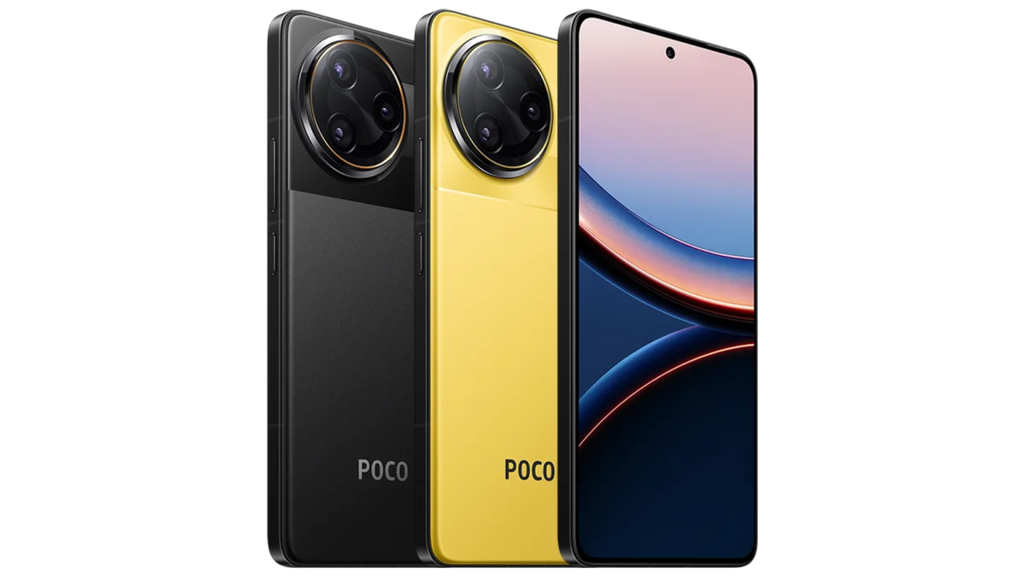
It’s still unmistakably a POCO, especially in the bright yellow finish, but the phone uses a glass back with a metal frame and carries an IP68 rating for dust and water resistance.
At 212 grams and 8.39mm thick, it isn’t a lightweight phone.
The trade-off is reassuringly solid construction. The phone doesn’t feel cheap or hollow.
The yellow model is the attention-grabber.
One complaint: the glass back can become a fingerprint magnet, depending on the finish and lighting. A case solves that quickly, but it’s worth knowing if you like using your phone naked.
Display: This Is One of the Best Parts
The 6.67-inch AMOLED panel is a highlight.
You get a 3200 × 1440 resolution, 120Hz refresh rate, 12-bit colour and Dolby Vision/HDR10+ support. POCO also rates the panel at up to 3,200 nits peak brightness, with up to 1,800 nits in high-brightness mode.
And yes, it looks fantastic.
Text is extremely sharp. Photos have plenty of punch. Scrolling through social media feels fluid.
The 120Hz refresh rate isn’t unusual anymore, but it still makes a huge difference compared with cheaper 60Hz phones.
There is one technical compromise, though: this isn’t an LTPO display. It doesn’t dynamically drop all the way down to 1Hz like some more expensive flagship phones.
For most people, that’s not a deal-breaker.
I’d call the F7 Ultra’s display flagship-grade in everyday use, even if it doesn’t have every efficiency trick found on a Galaxy S Ultra or premium Xiaomi.
Performance: This Is Why You Buy It
Now we get to the fun part.
The POCO F7 Ultra runs Qualcomm’s Snapdragon 8 Elite, built on a 3nm process, paired with up to 16GB of LPDDR5X RAM and 512GB of UFS 4.1 storage.
In normal use, it’s ridiculously fast.
Apps open immediately. Multitasking is effortless. Large games aren’t a problem.
And if you’re buying this phone specifically for gaming, the F7 Ultra makes a lot of sense.
POCO also includes its VisionBoost D7 gaming chip, along with Game Turbo features designed to improve graphics and touch response. The company claims sustained gaming performance around 59.9fps in one of its internal three-hour tests, though real results naturally depend on the game, temperature and settings.
That’s an important distinction.
Don’t treat manufacturer lab numbers as a guarantee for your own gaming session.
Still, the Snapdragon 8 Elite gives this phone a huge performance advantage over most conventional mid-range devices.
For heavy users, that extra headroom is the main reason to choose the Ultra.
Gaming: Fast, Smooth and Serious
I’ve always liked phones that don’t pretend they’re gaming devices while quietly throttling after 20 minutes.
The F7 Ultra is built for sustained performance.
The high touch-sampling rates are useful in fast games, and the powerful chipset means you don’t need to compromise heavily on graphics settings. POCO also says its thermal system uses 15 temperature sensors and monitors more than 30 usage scenarios.
But there’s a catch.
Powerful processors create heat.
Push the Snapdragon 8 Elite hard for an extended period and the phone can get warm. That’s normal for this class of hardware, but if you’re expecting a completely cool chassis during long gaming sessions, you’ll be disappointed.
Cameras: Better Than Old POCO Phones, But Not a Camera King
This is where I think the F7 Ultra falls short.
The hardware looks impressive on paper:
50MP Light Fusion 800 main camera
50MP floating telephoto with OIS
32MP ultra-wide
32MP selfie camera
The main sensor is 1/1.55-inch with an f/1.6 aperture and optical image stabilization. The telephoto offers a 60mm equivalent focal length, which works out to roughly 2.5x optical magnification.
The telephoto is the big upgrade.
You can actually take useful zoom shots without immediately falling into the ugly digital-zoom territory that cheaper phones often rely on.
Daylight photos from the main camera are generally good. Colours are punchy, HDR works reasonably well and there’s plenty of detail.
But good isn’t the same as class-leading.
Independent testing found the main camera competent but not especially impressive against similarly priced phones, while the ultra-wide camera can look softer and less consistent.
Low-light photography is decent, too.
The large-ish sensor, wide aperture and OIS give the phone plenty to work with. But again, I wouldn’t buy the F7 Ultra expecting Pixel- or Galaxy-level computational photography.
This is a performance-first phone with good cameras, not a camera phone that happens to be fast.
Video Recording Is Surprisingly Flexible
POCO gives you plenty of recording options.
The rear cameras can record up to 8K at 24fps, while 4K recording is available at up to 60fps. There are also various slow-motion modes and additional shooting features.
That’s more flexibility than most people will ever need.
The real question is consistency between cameras. If you’re frequently switching lenses while recording, the experience isn’t necessarily as polished as what you’d get from a top-end Samsung, Apple or Xiaomi flagship.
For casual video, though, it’s more than capable.
Battery Life: Strong, But the Numbers Need Context
The F7 Ultra packs a 5,300mAh battery.
That’s a healthy capacity, especially considering the phone’s relatively slim body. POCO says the phone can deliver 13.5 hours of continuous use and more than 15 hours of video playback in its internal testing.
Real-world battery life is naturally more complicated.
Screen brightness, 5G, gaming, cameras and background apps can destroy battery life much faster than a controlled laboratory test.
Still, independent testing found the battery life dependable, with moderate daily use leaving more than half the battery remaining after around four hours of screen-on time.
That’s excellent.
For normal users, a full day is easy. Two days is possible if you’re sensible with usage.
Heavy gamers will obviously get less.
120W Charging Is Ridiculously Fast
This is one of my favourite features.
POCO rates the F7 Ultra for 120W HyperCharge, and the company claims a full charge can take around 34 minutes under its internal test conditions.
That’s the kind of charging speed that changes your habits.
Forgot to charge overnight?
Plug it in while you shower, eat breakfast or get dressed.
You don’t need to leave it connected for hours.
The phone also supports 50W wireless charging, which is a huge bonus at this price.
There is one annoying catch in some markets: the charger isn’t included in the box. POCO specifically states that no power adapter is included in the package in certain regions.
So check the contents before buying.
A 120W phone without a 120W charger is a little frustrating.
Software: HyperOS Is Still the Weak Link
This is probably my biggest complaint.
The hardware is screaming “flagship.”
The software doesn’t always feel that polished.
The F7 Ultra launched with Android 15 and HyperOS 2, and the interface is packed with Xiaomi/POCO features, settings and customization options.
That’s great if you like tweaking everything.
It’s less great if you want a clean, simple Android experience.
There are also pre-installed apps and UI elements that can make the phone feel busier than it needs to be. Independent reviews have criticized HyperOS for feeling cluttered and bloated.
The good news?
The underlying hardware is so fast that the software rarely feels sluggish.
The bad news?
Speed can’t completely hide messy software design.
POCO F7 Ultra: Pros and Cons
What I Like
Excellent Snapdragon 8 Elite performance
Gorgeous 2K 120Hz AMOLED display
120W wired charging
50W wireless charging
Useful 2.5x telephoto camera
IP68 water and dust resistance
Strong battery life
Up to 16GB RAM and 512GB storage
Very competitive launch pricing
What I Don’t Like
Cameras aren’t class-leading
HyperOS can feel cluttered
No LTPO display
Heavy at 212g
Charger availability depends on market
Snapdragon 8 Elite can get warm under sustained heavy loads
POCO F7 Ultra vs Typical Flagship Phones
Category POCO F7 Ultra Premium Flagship
Performance Excellent Excellent
Display Excellent Excellent
Charging Much faster Usually slower
Wireless charging 50W Usually slower
Battery Very good Very good
Main camera Good Usually better
Telephoto Good Usually better
Software polish Average Usually better
Gaming Excellent Excellent
Value Excellent Expensive
This is the F7 Ultra’s entire philosophy in one table.
POCO spends the money where you’ll feel it.
You get an elite processor, fast memory, a high-resolution display and absurdly fast charging.
The places where the phone doesn’t quite match a true flagship are mostly camera processing, software polish and some finer design touches.
Should You Buy the POCO F7 Ultra?
Yes — if performance is your priority.
If you play demanding games, multitask heavily, want a beautiful display and hate waiting around for your phone to charge, the F7 Ultra is extremely easy to recommend.
The Snapdragon 8 Elite gives it serious horsepower, while the 5,300mAh battery and 120W charging make everyday use remarkably convenient.
I’d hesitate if you’re buying primarily for photography.
The cameras are good. The telephoto is a welcome addition. But at this price, there are phones that put more emphasis on image quality and software processing. Independent testing reached a similar conclusion, rating the camera system as one of the weaker parts of the overall package.
I’d also think twice if you strongly prefer clean Android software.
HyperOS is powerful, but it isn’t the cleanest interface around.
The Bottom Line
The POCO F7 Ultra is a performance-first flagship alternative, and that’s exactly how you should look at it.
It doesn’t try to beat the most expensive phones at everything.
Instead, it gives you the stuff you notice every single day: ridiculous performance, a brilliant display, excellent battery life and extremely fast charging.
The cameras are merely good. The software could be cleaner.
But if your priorities are speed, gaming and value, those compromises are pretty easy to live with.
The POCO F7 Ultra isn’t the best phone at everything. It’s the phone that gives you an unusually large amount of flagship hardware for the money.
And honestly, that’s what makes it interesting.