vivo X200 Pro Review: A Camera Phone That Means Business
The vivo X200 Pro is the kind of flagship that makes you stop looking at the spec sheet and start looking at the cameras.
It has a huge 6,000mAh battery, MediaTek’s Dimensity 9400 chip, a 6.78-inch LTPO AMOLED display, and a 200MP ZEISS APO telephoto camera. On paper, this is serious flagship hardware.
But specs aren’t everything.
The real question is simple: does the X200 Pro make sense as your everyday flagship, or is it mainly a camera phone with a great set of extras?
After looking closely at its hardware and feature set, here’s where the phone stands out—and where I think vivo still has some work to do.
vivo X200 Pro: Key Specifications
| Feature | vivo X200 Pro |
|---|---|
| Display | 6.78-inch LTPO AMOLED |
| Resolution | 2800 × 1260 |
| Refresh rate | 0.1–120Hz |
| Peak brightness | 4,500 nits local peak |
| Processor | MediaTek Dimensity 9400 |
| RAM | 16GB LPDDR5X |
| Storage | 512GB UFS 4.0 |
| Main camera | 50MP Sony LYT-818, OIS |
| Telephoto | 200MP ZEISS APO, OIS, 3.7x optical |
| Ultrawide | 50MP, autofocus |
| Selfie camera | 32MP |
| Battery | 6,000mAh |
| Wired charging | 90W FlashCharge |
| Wireless charging | Up to 30W, region-dependent |
| Protection | IP68 + IP69 |
| Software | Funtouch OS 15 / Android 15 |
| Weight | 223–228g |
Specifications can vary slightly by market, especially wireless charging and materials. vivo’s Pakistan model is listed with a 6,000mAh battery, 90W charging and IP68/IP69 protection.
The Camera Is Clearly the Star
Let’s get straight to the biggest reason to consider the X200 Pro.
That 200MP telephoto camera is ridiculous—in a good way.
vivo uses Samsung’s HP9 sensor for the periscope camera. It’s a 1/1.4-inch sensor with an f/2.67 aperture, 85mm equivalent focal length and optical image stabilization.
And this isn’t simply a case of putting “200MP” on the box.
The telephoto camera is designed around high-quality zoom. The 3.7x optical perspective is useful for portraits, people, buildings and distant subjects without forcing you into the extreme digital-zoom territory where detail normally starts falling apart.
The main camera is no slouch either.
You get a 50MP Sony LYT-818 sensor with OIS and a bright f/1.57 aperture. The ultrawide is another 50MP unit with autofocus.
That gives the X200 Pro a much more flexible setup than phones that treat the telephoto camera as an afterthought.
What I Like About the Camera Setup
- 200MP ZEISS APO telephoto
- Large 1/1.4-inch telephoto sensor
- Optical stabilization
- 50MP main camera with OIS
- 50MP autofocus ultrawide
- ZEISS T* coating designed to reduce reflections and flare
- ZEISS portrait and color features
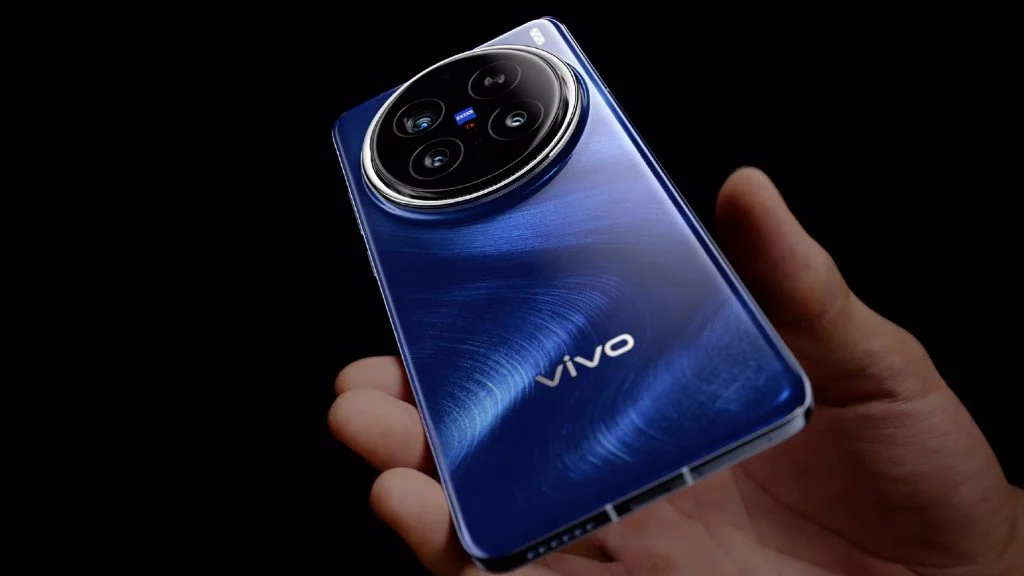
The ZEISS partnership is also more than a logo on the camera island. vivo uses ZEISS optics, coatings and imaging profiles throughout the camera system.
Still, there’s a catch.
More megapixels don’t automatically mean better photos. Processing, autofocus, exposure and color tuning matter just as much. And with a giant camera module plus a 223–228g body, this isn’t exactly a compact camera phone.
Performance: Dimensity 9400 Has Plenty of Muscle
The X200 Pro is powered by MediaTek’s Dimensity 9400, built on a 3nm process.
This isn’t a mid-range chip dressed up as a flagship. The processor uses an all-big-core CPU design, with a Cortex-X925 running at up to 3.626GHz alongside three Cortex-X4 cores and four Cortex-A720 cores.
You also get 16GB of LPDDR5X RAM and 512GB of UFS 4.0 storage in the configuration listed by vivo.
For you, that translates into plenty of headroom for demanding apps, gaming, camera processing and multitasking.
vivo also claims significant gains over the previous generation, including higher CPU and GPU performance and improved power efficiency. Those are manufacturer figures, so I’d treat them as useful context rather than independent benchmark results.
Is It Good for Gaming?
Yes, the hardware is clearly aimed at heavy workloads.
The Dimensity 9400’s GPU is MediaTek’s Immortalis-G925, and the phone also includes a dedicated cooling system. vivo says its cooling design improves heat dissipation substantially. But here’s the part gamers should remember:
A powerful chip still gets warm under sustained load.
That’s normal for a flagship. Don’t expect a thin phone running demanding games at high frame rates for long periods to stay completely cool.
The Display Looks Excellent on Paper
The X200 Pro has a 6.78-inch AMOLED display with a 2800 × 1260 resolution.
It supports an adaptive 0.1–120Hz refresh rate, which is exactly what I want to see on a premium phone. Scrolling can feel smooth while the panel can drop its refresh rate when high speed isn’t necessary.
vivo also rates the display for up to 4,500 nits of local peak brightness.
That’s a huge number, although you shouldn’t confuse local peak brightness with the sustained brightness you’ll see across the entire screen in normal outdoor use.
The panel supports P3 wide color gamut and 452ppi, so movies, photos and games should have plenty of visual punch.
This is one of those displays that makes sense for a flagship in 2026.
Battery Life Is One of Its Biggest Advantages
Here’s another area where vivo went big.
The X200 Pro packs a 6,000mAh battery using silicon-anode and semi-solid battery technology.
That’s considerably more reassuring than the 4,500–5,000mAh batteries we’ve become used to seeing in many premium phones.
vivo claims up to 18 hours of continuous video playback and 9.1 hours of continuous gaming under its test conditions. Those numbers shouldn’t be treated as a promise for normal use, but they show where vivo is aiming.
And then there’s charging.
90W wired charging means you shouldn’t be waiting around forever when the battery gets low. Wireless charging is also supported at up to 30W in supported markets and with the appropriate accessory.
The downside?
A 6,000mAh battery plus flagship cameras and cooling hardware contributes to the phone’s weight. At up to 228 grams, the X200 Pro is not a lightweight device.
That’s the trade-off.
Design: Premium, But Definitely a Big Phone
The X200 Pro measures roughly 162.36 × 75.95mm and is around 8.2–8.5mm thick depending on the version. Weight ranges from 223g to 228g depending on the material and color.The large circular camera module dominates the back.
Personally, that’s not necessarily a bad thing. It gives the phone a distinctive identity.
But you will notice it in your hand.
This is a large flagship.
If you prefer smaller phones that disappear into a pocket, the X200 Pro isn’t going to suddenly change your mind.
The upside is durability. vivo rates the phone IP68 and IP69 for dust and water resistance, although the company also warns that water resistance can diminish with everyday wear and damage.
There’s also an ultrasonic fingerprint sensor, which is a nice touch for a premium device.
Software: Feature-Rich Funtouch OS
The X200 Pro launched with Funtouch OS 15 based on Android 15 in markets including Pakistan.
The software includes a range of AI-oriented features, including live call translation and AI-assisted notes and transcripts.The bigger question isn’t whether the phone has AI features.
Every flagship does now.
The question is whether you’ll actually use them.
For most people, the everyday experience will still come down to app performance, notifications, multitasking, camera behavior and how much pre-installed software they have to deal with.
vivo X200 Pro: Pros and Cons
Pros
- Outstanding-looking camera hardware
- 200MP ZEISS APO telephoto with OIS
- Large 1/1.4-inch telephoto sensor
- 50MP Sony main camera with OIS
- 6,000mAh battery
- 90W wired charging
- 120Hz LTPO AMOLED display
- Dimensity 9400 performance
- 16GB RAM + 512GB UFS 4.0 storage
- IP68/IP69 protection
- Ultrasonic fingerprint sensor
Cons
- Heavy at up to 228g
- Large camera bump won’t appeal to everyone
- No microSD expansion
- Some features vary by region
- Peak brightness figures don’t represent full-screen sustained brightness
- Flagship performance can still mean heat during prolonged gaming
vivo X200 Pro vs a Typical Flagship
| Category | X200 Pro |
|---|---|
| Camera flexibility | ⭐⭐⭐⭐⭐ |
| Telephoto | ⭐⭐⭐⭐⭐ |
| Battery | ⭐⭐⭐⭐⭐ |
| Charging | ⭐⭐⭐⭐⭐ |
| Display | ⭐⭐⭐⭐⭐ |
| Performance | ⭐⭐⭐⭐⭐ |
| Compactness | ⭐⭐⭐ |
| Value proposition | ⭐⭐⭐⭐ |
The phone’s personality is obvious.
It’s built for people who care about cameras, battery life and high-end performance more than keeping the phone thin and light.
Should You Buy the vivo X200 Pro?
If your priority is photography, the X200 Pro deserves serious attention.
The 200MP ZEISS APO telephoto is the headline feature, but the bigger story is that vivo didn’t neglect the rest of the camera system. You get a strong main camera, an autofocus ultrawide and a hardware platform capable of handling demanding image processing.
The 6,000mAh battery is another major selling point.
And the Dimensity 9400 gives this phone enough horsepower that performance shouldn’t be a concern for most buyers.
But I wouldn’t recommend it to everyone.
If you want a light phone, this isn’t it. If you don’t care about zoom photography, you may also be paying for camera hardware you rarely use.
For camera-focused users, though, the X200 Pro is one of vivo’s most convincing flagship packages.
It’s not trying to be the smallest phone.
It’s not trying to be boringly safe either.
It’s a big, powerful camera phone with a huge battery—and that’s exactly why it stands out.
Leave a Reply